
 Anatomy
 Physiology
 Biochemistry
 Pharmacology
 Pathology
 Microbiology
 Forensic Medicine & Toxicology
 Community Medicine
 General Medicine
 Paediatric
 TB & Chest(Respiratory Medicine)
 Psychiatry
 Dermatology, Venereology & Leprosy
 General Surgery
 Orthopaedics
 ENT Oto-rhino-laryngology
 Ophthalmology
 Obstetrics & Gynaecology
 Anaesthesiology
 Radiology
 Dentistry
 Neurology & Neurosurgery
 Urology
 Cardiology
 Cardiovascular and Thoracic Surgery (CVTS)
 Critical Care Unit (CCU)
 Nephrology with Dialysis
 Paediatrics Surgery
 Plastic Surgery
 Gastroenterology
 Bariatic & Metabolic Surgery




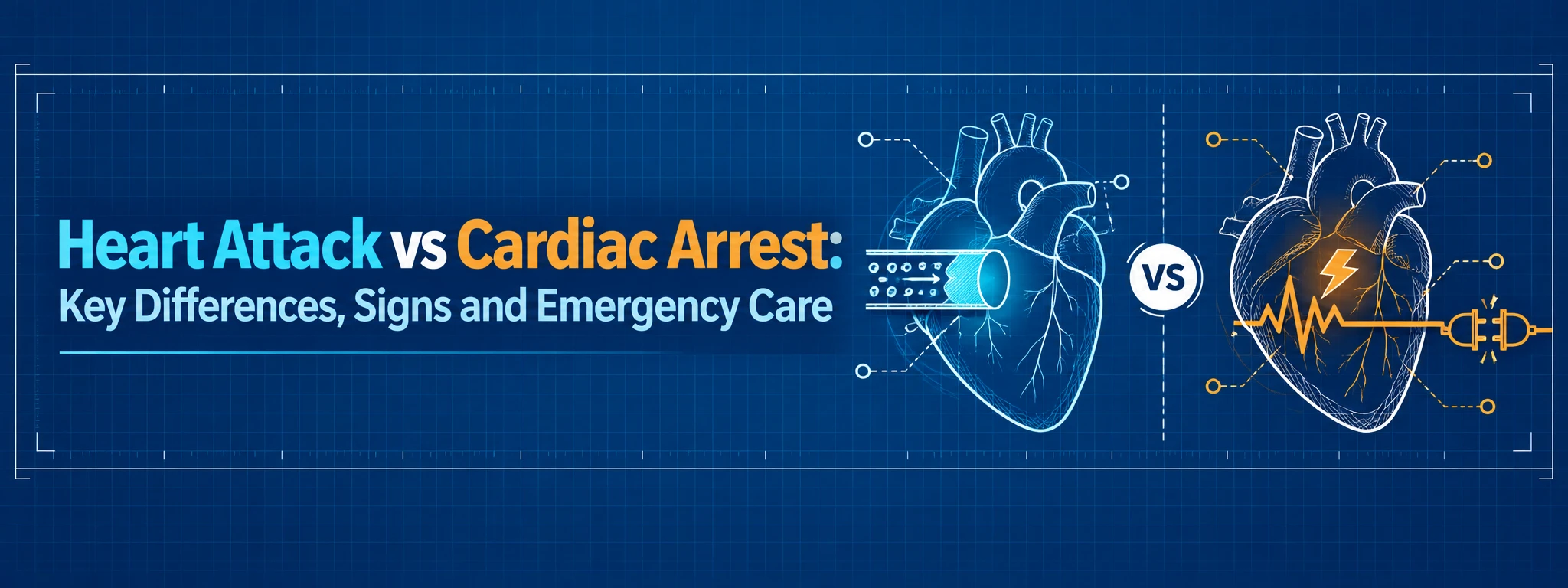
Heart Attack vs Cardiac Arrest: Key Differences, Signs and Emergency Care
Heart attack and cardiac arrest are two serious heart-related emergencies, but they are not the same. Both can become life-threatening without immediate medical attention. Understanding the difference between heart attack vs cardiac arrest can help people recognise warning signs and respond quickly.
For people searching for cardiac emergency care in Jehanabad and across Bihar, knowing these differences is especially important. Early medical intervention can save lives and reduce the risk of severe complications.
What Is a Heart Attack?
A heart attack occurs when blood flow to a part of the heart muscle becomes blocked, usually because of a blood clot or narrowing in a coronary artery. Without enough oxygen-rich blood, the affected heart muscle can become damaged.
Common heart attack signs include:
Chest pain, pressure or tightness
Pain spreading to the arms, back, neck or jaw
Shortness of breath
Cold sweating
Nausea or vomiting
Dizziness or unusual fatigue
Symptoms may develop suddenly or gradually. Some people, particularly women and older adults, may experience less typical symptoms.
What Is Cardiac Arrest?
Cardiac arrest happens when the heart suddenly stops pumping blood effectively due to an electrical problem. The person becomes unconscious and cannot breathe normally or may only gasp.
Common cardiac arrest symptoms include:
Sudden collapse
Loss of consciousness
No normal breathing or occasional gasping
No response when spoken to or touched
Cardiac arrest is a medical emergency. Immediate CPR and the use of an Automated External Defibrillator (AED), if available, can significantly improve the chance of survival.
Heart Attack vs Cardiac Arrest: Key Differences
| Feature | Heart Attack | Cardiac Arrest |
|---|---|---|
| Main cause | Blocked blood flow to the heart | Electrical malfunction of the heart |
| What happens? | Heart muscle gets damaged | Heart stops pumping blood effectively |
| Common signs | Chest pain, sweating, breathlessness | Collapse, unconsciousness, abnormal breathing |
| Consciousness | Usually remains conscious initially | Usually loses consciousness immediately |
| Immediate response | Emergency medical treatment | CPR, AED and emergency medical help |
| Relationship | Can trigger cardiac arrest | Can occur due to a heart attack |
Important: A heart attack is a circulation problem, while cardiac arrest is an electrical problem. However, a heart attack can sometimes lead to cardiac arrest.
Can a Heart Attack Cause Cardiac Arrest?
Yes. A heart attack can damage the heart's electrical system and trigger dangerous abnormal heart rhythms. In some cases, this can cause sudden cardiac arrest.
However, cardiac arrest can also occur because of other conditions, including heart rhythm disorders, cardiomyopathy and certain electrical abnormalities.
This is why recognising heart attack symptoms and seeking immediate medical attention is essential.
What Should You Do During a Heart Emergency?
If someone experiences possible heart attack symptoms, call emergency services immediately. Do not wait for symptoms to disappear or attempt to drive the person to hospital yourself if emergency assistance is available.
If someone suddenly collapses and is unresponsive:
Call 112 for emergency assistance in India.
Check whether the person is breathing normally.
Start CPR if the person is unresponsive and not breathing normally.
Ask someone to bring an AED if one is available.
Follow the AED instructions until medical help arrives.
If you are not trained in CPR, the emergency call handler may guide you through hands-only CPR.
How Are Heart Attack and Cardiac Arrest Diagnosed?
Doctors use different tests depending on the patient's condition and symptoms. These may include:
ECG: Records the electrical activity of the heart.
Blood tests: Troponin testing helps identify heart muscle damage.
Echocardiography: Uses ultrasound to assess heart structure and function.
Angiography: Helps identify blockages in coronary arteries.
Heart rhythm monitoring: Detects abnormal heart rhythms.
The choice of tests depends on the medical assessment and urgency of the situation.
Cardiac Emergency Care at KSMCH, Jehanabad, Bihar
For people looking for cardiac care in Jehanabad, Kurma Sanskriti Medical College & Hospital (KSMCH) provides information about its cardiology services and emergency facilities on its official website.
The hospital's Cardiology department page lists cardiac consultation and OPD, ECG, ECHO, cardiac monitoring and care for heart-related conditions. Its Emergency & Trauma Centre page describes emergency and critical care support.
For current cardiologist availability, specific procedures and emergency arrangements, contact the hospital directly before visiting.
Hospital: Kurma Sanskriti Medical College & Hospital (KSMCH)
Address: Kurma, Jehanabad, Bihar – 804417
Contact: +91-9155266001 / +91-9955990975
Website: https://www.ksmch.in/
In a suspected heart attack or cardiac arrest, do not delay emergency assistance while searching for hospital information.
Frequently Asked Questions
1. What is the main difference between a heart attack and cardiac arrest?
A heart attack occurs due to blocked blood flow to the heart, while cardiac arrest occurs when an electrical problem causes the heart to stop pumping blood effectively.
2. Is cardiac arrest more dangerous than a heart attack?
Cardiac arrest causes sudden loss of effective circulation and requires immediate CPR and emergency treatment. Both conditions are life-threatening.
3. Can a heart attack happen without chest pain?
Yes. Some people experience breathlessness, nausea, sweating, back or jaw pain, dizziness or unusual fatigue without typical chest pain.
4. Can a person survive cardiac arrest?
Yes. Immediate CPR, early AED use and advanced emergency treatment can improve survival chances.
5. Where can I find cardiac care in Jehanabad, Bihar?
KSMCH in Kurma, Jehanabad, lists cardiology and emergency care facilities. Contact the hospital to confirm current services and specialist availability .
Conclusion
Heart attack and cardiac arrest are different conditions, but both require immediate medical attention. A heart attack is caused by reduced blood flow to the heart muscle, while cardiac arrest occurs when the heart suddenly stops pumping blood effectively because of an electrical problem.
Recognising the warning signs, calling emergency services, starting CPR when needed and using an AED quickly can make a life-saving difference.
For people in Jehanabad and nearby parts of Bihar, understanding local emergency-care options is also important. Visit the official KSMCH website to learn about its listed cardiology, emergency and critical care services, and confirm current availability before a planned visit.
No approved comments yet. Be the first to share your thoughts.